
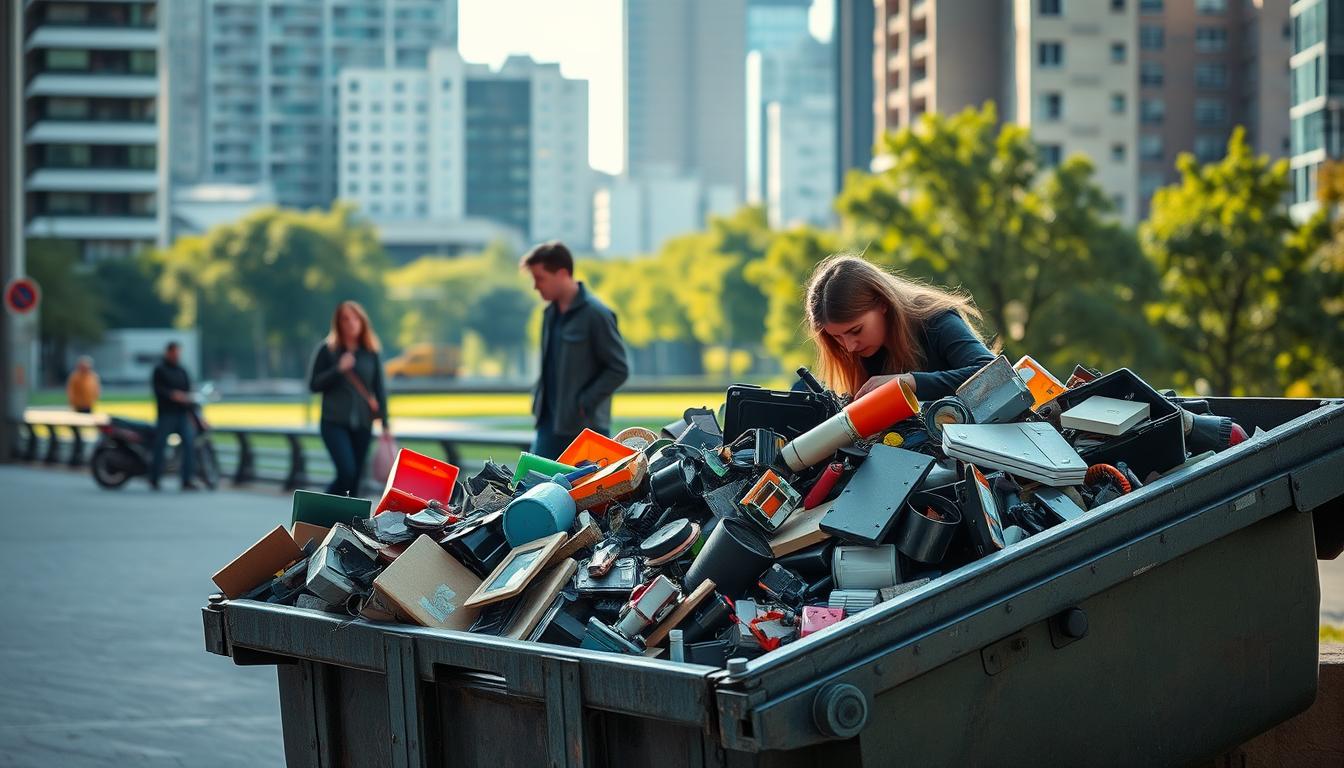
Dumpster Diving Helps Environment by rescuing valuable items from waste streams and giving them a second life instead of sending them to landfills. This practice reduces the demand for new products while keeping usable goods in circulation longer.
When people recover items from dumpsters, they’re essentially performing a form of urban recycling that goes beyond traditional waste management systems. Every rescued item represents resources saved and waste diverted from our already overwhelmed landfills.
TL;DR
- Americans throw away 254 million tons of trash annually, with 30-40% being perfectly usable items that dumpster diving can rescue.
- Each diverted item saves the energy and raw materials needed to produce a replacement, reducing carbon footprint by up to 75%.
- Food waste alone costs the U.S. economy $218 billion yearly while contributing 8% of global greenhouse gas emissions.
- Dumpster diving extends product lifecycles by an average of 2-5 years, significantly reducing manufacturing demand.
How Dumpster Diving Helps Environment Through Waste Reduction
The most direct environmental benefit comes from keeping usable items out of landfills and incinerators. When dumpster divers rescue furniture, electronics, clothing, and household goods, they prevent these items from taking up space in waste facilities that are already reaching capacity limits.
Landfills produce methane gas as organic materials decompose, contributing significantly to greenhouse gas emissions. By reducing the volume of waste entering these facilities, dumpster diving helps minimize this environmental impact while extending the useful life of existing landfill space.
Reducing Manufacturing Demand
Every item rescued from a dumpster means one less new item needs to be manufactured. This ripple effect saves raw materials, energy, water, and transportation resources that would otherwise be consumed in the production process.
Consider these manufacturing impacts that dumpster diving helps avoid:
- Raw Material Extraction – Mining, logging, and drilling operations that damage ecosystems.
- Energy Consumption – Electricity and fossil fuels used in factories and processing facilities.
- Water Usage – Industrial processes that consume billions of gallons annually.
- Transportation Emissions – Shipping raw materials and finished goods across global supply chains.
Food Waste Recovery and Environmental Impact
Food represents one of the most environmentally significant categories for dumpster diving recovery efforts. The Role of Dumpster Diving in Minimizing Food Waste shows how rescuing edible food prevents the waste of all resources used in its production.
When food reaches landfills, it decomposes without oxygen and produces methane – a greenhouse gas 25 times more potent than carbon dioxide. Food waste accounts for roughly 22% of municipal solid waste, making recovery efforts particularly impactful.
Agricultural Resource Conservation
Each rescued food item represents saved agricultural inputs including water, fertilizer, pesticides, and farmland. These resources are becoming increasingly scarce as global populations grow and climate change affects growing conditions.
The environmental benefits extend beyond the farm level:
- Water Conservation. Agriculture uses 70% of global freshwater, so reducing food waste directly saves this precious resource.
- Soil Protection. Less demand for new food production means reduced pressure on agricultural lands and soil erosion.
- Biodiversity Preservation. Lower agricultural expansion pressure helps protect natural habitats and wildlife populations.
Electronics and Hazardous Material Diversion
Electronic waste poses special environmental challenges due to toxic materials like lead, mercury, and lithium batteries. When dumpster divers rescue working electronics, they prevent these hazardous substances from entering the waste stream.
Many electronic items thrown away still function perfectly or need only minor repairs. Extending their useful life through recovery prevents both environmental contamination and the need for new device manufacturing.
Test Electronics Safely
Always test rescued electronics in a safe environment before bringing them home. Check for obvious damage and ensure all safety features work properly.
Rare Earth Mineral Conservation
Smartphones, laptops, and other electronic devices contain rare earth minerals extracted through environmentally destructive mining operations. By keeping these devices in use longer, dumpster diving reduces demand for new mining activities.
The extraction and processing of rare earth minerals generates significant pollution and habitat destruction. Every rescued electronic device helps reduce pressure on these sensitive mining operations.
Textile and Clothing Recovery Benefits
The fashion industry ranks as one of the world’s most polluting industries, consuming vast amounts of water and chemicals while generating massive waste streams. Dumpster diving helps address this problem by rescuing discarded clothing and textiles.
Fast fashion has created a throwaway culture where clothing gets discarded after minimal use. Recovering these items extends their lifecycle and reduces demand for new textile production.
Environmental benefits of textile recovery include:
- Water Conservation – Cotton production requires 2,700 liters of water per t-shirt.
- Chemical Reduction – Textile dyeing and processing use toxic chemicals that pollute waterways.
- Energy Savings – Manufacturing new clothing consumes significant electricity and fossil fuels.
- Microplastic Prevention – Synthetic fabrics release microplastics during washing cycles.
Building Materials and Construction Waste
Construction and demolition activities generate enormous waste volumes, much of which consists of reusable materials like lumber, fixtures, and hardware. Dumpster diving at construction sites can rescue valuable building materials that would otherwise fill landfills.
These materials often retain their structural integrity and can be used for home improvement projects, art installations, or resale. Waste Management Solutions: How Dumpster Diving Helps the Environment explores how this practice contributes to broader sustainability goals.
Reducing Virgin Material Demand
Lumber, metal, and other building materials require energy-intensive extraction and processing. When dumpster divers rescue these materials, they reduce demand for virgin resources while keeping useful items in circulation.
This practice supports circular economy principles by maintaining material value and reducing waste generation at its source.
Community Education and Awareness
Dumpster diving serves as a powerful educational tool that raises awareness about waste generation and consumption patterns. When people see valuable items being discarded, it often motivates them to reconsider their own throwing-away habits.
Dumpster Diving As Environmental Activism: Raising Awareness Through Action demonstrates how this practice can inspire broader environmental consciousness in communities.
Many dumpster divers share their finds on social media or with friends, spreading awareness about waste issues and encouraging more mindful consumption behaviors. This ripple effect amplifies the environmental benefits beyond the direct waste reduction achieved through diving activities.
Articles You May Like
Frequently Asked Questions
How much waste does dumpster diving actually prevent from landfills?
Individual dumpster divers typically rescue 50-200 pounds of usable items monthly, while organized groups can divert thousands of pounds from waste streams annually.
Does dumpster diving really make a difference for climate change?
Yes, by reducing manufacturing demand and preventing methane emissions from landfills, dumpster diving contributes measurably to carbon footprint reduction on both individual and community levels.
What types of items have the biggest environmental impact when rescued?
Electronics and food waste provide the highest environmental benefits due to toxic material diversion and resource-intensive production processes respectively.
Can dumpster diving help with recycling goals?
Dumpster diving goes beyond traditional recycling by extending product lifecycles rather than breaking items down for material recovery, making it more environmentally beneficial than standard recycling processes.
How does food rescue through dumpster diving compare to composting?
Rescuing edible food for consumption is more environmentally beneficial than composting because it preserves all the resources used in food production while preventing methane emissions from anaerobic decomposition.
Final Thoughts
Dumpster Diving Helps Environment through multiple pathways including waste reduction, resource conservation, and community education about consumption patterns. The practice addresses environmental challenges at their source by keeping valuable materials in circulation longer.
Start small by focusing on one category like food or electronics to see the immediate environmental impact of your efforts. Your First Dive: A Step-by-Step Guide to Getting Started with Dumpster Diving provides practical steps for beginners who want to contribute to environmental protection through waste recovery activities.


