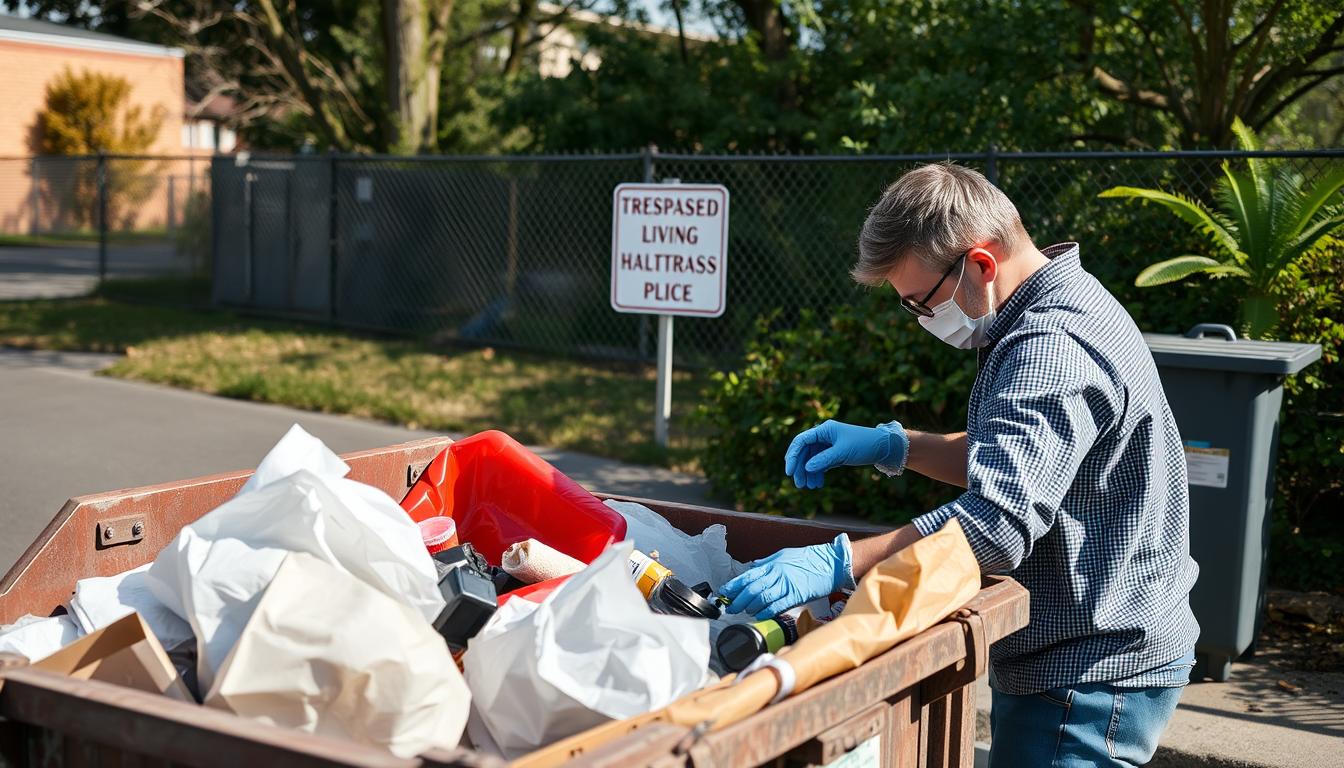
Avoid Trespassing Dumpster Diving starts with knowing where you can legally search and which areas are completely off-limits. Many new divers make costly mistakes by assuming all dumpsters are fair game, but property laws vary significantly by location and can result in serious legal consequences.
Understanding trespassing laws protects you from fines, arrests, and potential civil liability while still allowing you to find valuable items legally. The key is learning to identify public versus private property and recognizing the warning signs that indicate restricted areas.
TL;DR
- Dumpsters on private property require permission – even if accessible from public areas, you can face trespassing charges.
- Public dumpsters in city areas are typically legal to search, but always check local ordinances first.
- Posted “No Trespassing” signs make any dumpster diving illegal, with fines ranging from $100-$1000 in most states.
- Business hours matter – accessing dumpsters during closed hours increases trespassing risk even on seemingly public property.
Avoid Trespassing Dumpster Diving
The most important rule for legal dumpster diving is respecting property boundaries. Private property extends to the dumpsters on that property, meaning you need explicit permission from the owner or manager before searching through their waste.
Many businesses place dumpsters in areas that seem accessible to the public, but these containers often sit on private property. Even if you can reach a dumpster from a public sidewalk or parking area, the actual location of the container determines legality.
Identifying Private Property Boundaries
Look for clear markers that indicate private property before approaching any dumpster. Fencing, gates, painted lines, and building proximity all signal potential trespassing zones.
- Enclosed areas – Dumpsters behind fences, gates, or within building perimeters are private property
- Parking lot placement – Containers in business parking lots typically belong to that business
- Loading dock areas – These zones are almost always restricted private property
- Residential complexes – Apartment and condo dumpsters require resident or management permission
Legal Dumpster Locations
Public dumpsters offer the safest legal option for diving without trespassing concerns. These containers are typically owned and maintained by city or county waste management departments.
Municipal dumpsters appear in public parks, along city streets, and in government building areas. However, even public dumpsters may have local restrictions, so research your city’s ordinances before diving.
Safe Public Diving Spots
Focus your search efforts on clearly public areas where dumpsters serve general community needs rather than specific businesses or residents.
- City parks and recreational areas. These dumpsters are publicly owned and typically legal to search during park hours.
- Public event locations. After festivals or community events, temporary dumpsters often contain valuable discarded items.
- Municipal building areas. Government offices and public services sometimes have accessible waste containers.
- Public beach or waterfront areas. Coastal communities often place dumpsters for general public use.
Reading Warning Signs
Posted signs provide clear legal boundaries that you must respect to avoid trespassing charges. “No Trespassing,” “Private Property,” and “Authorized Personnel Only” signs create legal liability for anyone who ignores them.
Some businesses post specific “No Dumpster Diving” signs, which carry the same legal weight as general trespassing warnings. These signs indicate that the property owner has explicitly prohibited waste searching activities.
Document Your Research
Take photos of public dumpster locations and note the absence of trespassing signs. This documentation can protect you if questioned by authorities about your legal right to search specific containers.
Business Hour Considerations
Timing affects the legality of dumpster access, even in seemingly public areas. Many businesses allow daytime access to dumpsters near their property but consider after-hours searching as trespassing.
Shopping centers and retail plazas often have mixed public-private zones where dumpster access depends on business hours and specific container ownership. When in doubt, stick to clearly marked public areas or seek permission during business hours.
Getting Permission
The safest approach to private dumpster diving involves asking for explicit permission from property owners or managers. Many businesses will grant permission if you explain your intentions and demonstrate respect for their property.
Approach business managers during slow periods and explain that you’re interested in rescuing usable items from their waste stream. Offer to sign a liability waiver and promise to leave areas cleaner than you found them.
Building Relationships
Regular permission-based diving relationships benefit both parties – you get consistent access to good finds, and businesses get help managing their waste disposal costs.
- Retail stores – May appreciate help disposing of damaged packaging and returned items
- Restaurants – Could benefit from food waste reduction and container management
- Office buildings – Often have excess paper, electronics, and office supplies
- Construction sites – May welcome help clearing usable building materials
State Law Variations
Trespassing laws differ significantly between states, with some areas having stricter enforcement and higher penalties than others. Research your local and state laws before beginning any dumpster diving activities.
Some states classify dumpster diving on private property as theft rather than simple trespassing, which carries more serious legal consequences. Understanding these legal variations helps clarify how different states approach waste-related legal issues, and you can find detailed information about specific state regulations through the Cornell Law School’s trespassing law resources.
Common Legal Penalties
Trespassing violations typically result in misdemeanor charges with fines ranging from $100 to $1,000 for first-time offenders. Repeat violations or trespassing with intent to steal can escalate to felony charges in some jurisdictions.
- First offense – Usually results in warnings or small fines under $200
- Repeat violations – Can lead to fines up to $1,000 and possible jail time
- Property damage – Additional charges if you damage locks, fences, or containers
- Theft charges – Possible if you take items with perceived value
Dealing with Security
When approached by security guards or property owners, remain calm and respectful while clearly stating your understanding of property boundaries. Most situations can be resolved peacefully by simply leaving the area immediately.
Never argue about property rights or challenge security personnel directly. Following proper safety protocols includes knowing when to walk away from potentially confrontational situations.
Articles You May Like
Frequently Asked Questions
Can I dumpster dive if the dumpster is on public property but serves a private business?
No, the business typically owns or leases the dumpster regardless of its physical location. You need permission from the business owner even if the container sits on public land.
What should I do if a security guard asks me to leave while dumpster diving?
Leave immediately and politely. Arguing with security can escalate to trespassing charges even if you believe you’re on public property.
Are apartment complex dumpsters considered private property?
Yes, apartment complex dumpsters are private property serving the residents and management company. You need permission from property management to search these containers legally.
How can I tell if a dumpster is publicly owned?
Look for city or county logos on the container, placement in clearly public areas like parks, and absence of private property signage. When in doubt, contact your local waste management department.
Final Thoughts
Avoid Trespassing Dumpster Diving requires careful attention to property boundaries and local laws, but following these guidelines keeps your diving activities legal and safe. The extra research time pays off by protecting you from costly legal troubles.
Start with clearly public locations and build relationships with business owners who might grant permission for private property diving. This approach creates sustainable, legal diving opportunities while respecting property rights.