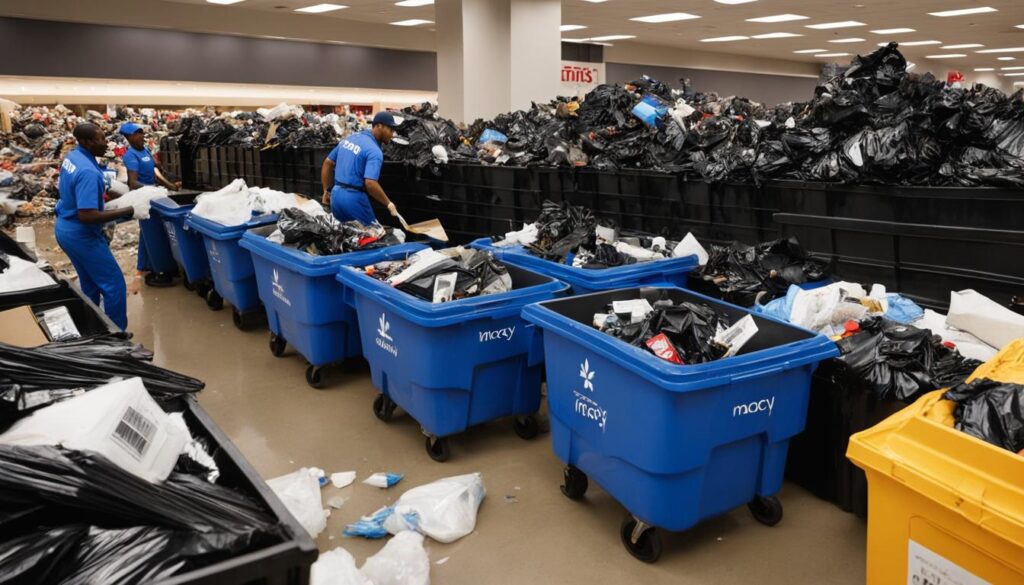
Dumpster Diving At Macy’s can be tempting when you’re looking for designer clothes, shoes, and cosmetics at zero cost. This major department store chain discards merchandise regularly, but accessing their dumpsters comes with significant legal and safety risks that every treasure hunter should understand before attempting.
While dumpster diving itself isn’t illegal in most places, Macy’s has strict no-trespassing policies and keeps their dumpsters locked. Getting caught can result in trespassing charges, theft accusations, or disorderly conduct citations that could affect your record and future opportunities.
TL;DR
- Macy’s dumpsters are typically locked and located on private property with strict no-trespassing policies enforced.
- Legal penalties for unauthorized dumpster diving can include trespassing charges with fines up to $500 and possible jail time.
- Valuable finds may include clothing with tags, shoes, cosmetics, bedding, and kitchen items from returns and damaged inventory.
- Always wear protective gear including gloves and closed-toe shoes, and thoroughly inspect items for damage before taking them home.
Dumpster Diving At Macy’s Legal Guidelines
Understanding the legal landscape is essential before attempting any dumpster diving activities at Macy’s locations. While the act of dumpster diving itself isn’t federally illegal, property laws create significant barriers that make it risky at major retailers.
Macy’s operates on private property with clearly posted no-trespassing signs in most locations. Their dumpsters are typically positioned behind the store in areas that require crossing private property to access, automatically making your presence there illegal without permission.
Potential Legal Consequences
Getting caught dumpster diving at Macy’s can result in several types of charges depending on your local jurisdiction and the circumstances of your case.
- Trespassing charges – Most common penalty with fines ranging from $200-$500 and possible community service.
- Theft accusations – Taking items from dumpsters can be considered theft since they remain store property until collected by waste management.
- Disorderly conduct – Disturbing store operations or creating public disturbances can lead to additional charges.
- Criminal trespass – More serious charges if you ignore posted warnings or return after being asked to leave.
Research your local laws thoroughly before considering any dumpster diving activities. Some cities have specific ordinances that make dumpster diving illegal regardless of property ownership, while others focus primarily on trespassing violations.
What Macy’s Throws Away
Macy’s generates significant waste from their retail operations, including returned merchandise, damaged inventory, and seasonal clearance items that don’t sell. Understanding what typically ends up in their dumpsters can help you assess whether the risks are worth the potential rewards.
The department store chain handles thousands of returns monthly, and items that can’t be resold often get discarded rather than sent back to vendors. This includes clothing with minor defects, cosmetics with damaged packaging, and seasonal merchandise that’s no longer relevant.
Common Valuable Items Found
Successful dumpster divers at retail locations similar to Macy’s have reported finding various valuable items, though results vary significantly by location and timing.
- Designer clothing – Items with tags still attached that were returned or had minor packaging damage.
- Shoes and accessories – Footwear, handbags, and jewelry that couldn’t be resold due to display wear or minor defects.
- Cosmetics and fragrances – Beauty products with damaged outer packaging but intact inner containers.
- Home goods – Bedding, towels, kitchen items, and small appliances from returns or floor displays.
- Holiday decorations – Seasonal items discarded after major holidays when storage space is needed.
Safety First
Always wear thick gloves, closed-toe shoes, and long pants when dumpster diving. Broken glass, sharp metal, and hazardous cleaning chemicals pose serious injury risks in commercial dumpsters.
Macy’s Waste Management Procedures
Understanding how Macy’s handles their waste disposal can provide insights into timing and what you might expect to find. The company follows standard retail waste management practices that prioritize efficiency and loss prevention.
Most Macy’s locations use locked dumpsters and compactors to prevent unauthorized access and reduce theft opportunities. Waste removal typically occurs on scheduled days, often early morning or late evening when foot traffic is minimal.
Return Processing System
Macy’s has a systematic approach to handling returned merchandise that affects what ends up in their dumpsters versus what gets returned to vendors or donated to charity.
- Initial inspection. Returned items are checked for condition, original packaging, and resale viability.
- Vendor returns. Items in good condition are often sent back to manufacturers or suppliers for credit.
- Clearance attempts. Slightly damaged items may be marked down significantly before being considered for disposal.
- Final disposal. Items that can’t be resold, returned, or donated are disposed of in dumpsters or sent to waste management facilities.
Safer Alternatives To Dumpster Diving
Rather than risking legal consequences and safety hazards, consider these legitimate ways to find discounted Macy’s merchandise and similar deals without breaking any laws.
Many alternatives offer similar savings opportunities without the legal risks associated with dumpster diving at major retailers like Target or other department stores.
Legal Money-Saving Options
- Clearance sections – Check Macy’s clearance racks regularly for deeply discounted merchandise.
- Outlet stores – Visit Macy’s Backstage locations for discounted designer items and overstock merchandise.
- Online sales – Monitor Macy’s website for flash sales, promotional codes, and free shipping offers.
- Thrift stores – Find similar name-brand clothing at Goodwill, Salvation Army, and local consignment shops.
- Estate sales – Discover high-quality clothing and accessories at estate and garage sales in affluent neighborhoods.
These legal alternatives often provide better quality items than what you’d find in dumpsters, without the associated health risks or legal consequences. Some smaller retailers may have more lenient policies, but major chains like Macy’s maintain strict security measures.
Safety Considerations And Health Risks
Dumpster diving at any retail location poses significant health and safety risks that go beyond legal consequences. Commercial dumpsters contain various hazards that can cause serious injuries or health problems.
Retail dumpsters often contain broken glass from displays, sharp metal from fixtures, and cleaning chemicals that can cause burns or respiratory problems. The enclosed nature of dumpsters also creates oxygen-poor environments that can be dangerous.
Physical Dangers
Commercial retail dumpsters present unique hazards compared to residential waste containers due to the types of materials and chemicals involved in retail operations.
- Sharp objects – Broken hangers, glass displays, metal fixtures, and packaging materials with sharp edges.
- Chemical exposure – Cleaning supplies, cosmetics, and other retail products can leak and create toxic fumes.
- Structural hazards – Unstable piles of merchandise and slippery surfaces from spilled liquids.
- Disease transmission – Bacteria, mold, and other pathogens thrive in warm, moist dumpster environments.
Professional waste management workers use specialized equipment and training to safely handle these materials. Without proper protection and knowledge, dumpster diving becomes extremely risky for untrained individuals.
Articles You May Like
Frequently Asked Questions
Is dumpster diving at Macy’s legal?
While dumpster diving itself isn’t federally illegal, Macy’s dumpsters are on private property with no-trespassing policies, making access illegal without permission. You could face trespassing charges, theft accusations, or disorderly conduct citations.
What valuable items can you find in Macy’s dumpsters?
Potential finds include clothing with tags, shoes, cosmetics with damaged packaging, bedding, towels, and kitchen items from returns or damaged inventory. However, accessing these dumpsters illegally isn’t worth the legal risks.
Are Macy’s dumpsters locked?
Yes, most Macy’s locations use locked dumpsters and compactors to prevent unauthorized access. This is both a security measure and a clear indication that access is prohibited.
What are safer alternatives to dumpster diving at Macy’s?
Legal alternatives include shopping clearance sections, visiting Macy’s Backstage outlets, monitoring online sales, shopping at thrift stores, and attending estate sales in affluent neighborhoods.
What safety risks are involved in dumpster diving?
Risks include cuts from broken glass and sharp objects, chemical exposure from cleaning products and cosmetics, structural hazards from unstable merchandise piles, and disease transmission from bacteria and mold.
Final Thoughts
Dumpster Diving At Macy’s might seem appealing for finding designer goods at no cost, but the legal risks and safety hazards make it an impractical choice for most people. The potential for trespassing charges, theft accusations, and serious injuries far outweigh any possible benefits from recovered merchandise.
Focus your energy on legal alternatives that provide similar savings without the associated risks. Clearance shopping, outlet stores, and thrift hunting offer sustainable ways to find quality merchandise while staying within the bounds of the law.