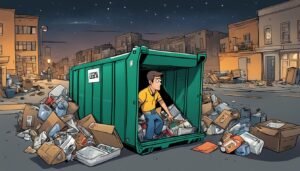
Creative Upcycling through dumpster diving opens up a world of possibilities for transforming discarded items into functional and beautiful pieces. This sustainable practice combines the thrill of treasure hunting with the satisfaction of giving new life to forgotten objects.
Whether you’re searching for furniture to restore, materials for DIY projects, or unique items to repurpose, dumpster diving offers an eco-friendly way to source materials while reducing waste. The key is knowing how to spot potential in what others see as trash.
TL;DR
- Dumpsters contain an average of 30-40% reusable items including furniture, electronics, and clothing.
- Upcycling saves 87% of material costs compared to buying new items for crafting projects.
- Peak dumpster diving times are Sunday evenings and early Monday mornings when weekly cleanouts occur.
- Basic restoration tools like sandpaper, paint, and wood glue can transform 90% of salvaged furniture finds.
Creative Upcycling: Turning Trash into Treasure
Creative upcycling transforms the ordinary act of discarding into an opportunity for innovation. When you combine this mindset with dumpster diving, every expedition becomes a chance to discover raw materials for your next project.
The beauty of upcycling lies in seeing potential where others see problems. That weathered wooden chair becomes the perfect candidate for a fresh paint job and new upholstery, while discarded electronics can provide components for unique lighting fixtures.
Essential Items to Look For
Successful upcyclers know which items offer the most potential for transformation:
- Solid wood furniture – Even damaged pieces can be restored with basic woodworking skills.
- Metal items – Easily cleaned, painted, or welded into new configurations.
- Glass containers – Perfect for storage solutions, planters, or decorative pieces.
- Fabric and textiles – Can be repurposed into bags, pillows, or wall art.
- Electronic components – Useful for steampunk projects or modern art installations.
Planning Your Upcycling Projects
Before heading out on your next dumpster diving expedition, create a mental inventory of projects you want to tackle. This focused approach helps you recognize valuable materials when you see them.
Start with simple projects that require minimal tools and experience. A coat of paint can completely transform furniture, while basic sewing skills open up endless possibilities for textile finds.
Beginner-Friendly Upcycling Ideas
- Paint furniture pieces. Clean surfaces thoroughly and apply primer before adding your chosen color scheme.
- Create storage solutions. Turn containers, boxes, and baskets into organized storage systems.
- Make plant containers. Almost any waterproof container can become a unique planter with proper drainage.
- Design wall art. Combine found materials into interesting visual displays for your home.
Advanced Restoration Techniques
As your skills develop, you can tackle more complex restoration projects. Advanced upcycling techniques open up possibilities for creating truly unique pieces.
Learn basic woodworking, upholstery, or metalworking skills to expand your capabilities. Online tutorials and community workshops provide excellent learning opportunities for developing these practical skills.
Tools and Materials You’ll Need
Building a basic toolkit enables you to handle most upcycling projects:
- Sandpaper and sanding blocks – Essential for preparing surfaces for painting or staining.
- Quality brushes and rollers – Invest in good application tools for professional-looking results.
- Wood glue and screws – Necessary for structural repairs and reinforcement.
- Drop cloths and cleaning supplies – Protect your workspace and clean items thoroughly.
- Safety equipment – Gloves, masks, and eye protection keep you safe during projects.
Pro Upcycling Tip
Always clean and disinfect items before starting any restoration work. This step ensures your safety and helps you better assess the true condition of your finds.
Safety Considerations for Upcycling Projects
Working with found materials requires extra attention to safety protocols. Unknown histories mean potential exposure to chemicals, mold, or structural damage that could pose health risks.
Test paint for lead content on older furniture, wear protective equipment when sanding, and ensure adequate ventilation in your workspace. When in doubt about an item’s safety, choose to pass rather than risk your health.
Common Safety Hazards
Stay alert for these potential dangers when evaluating found items:
- Lead paint – Common in furniture made before 1978, requires special handling procedures according to EPA guidelines.
- Structural damage – Hidden rot, loose joints, or compromised integrity can cause injury.
- Chemical residues – Unknown substances may have contaminated surfaces or interiors.
- Sharp edges – Broken glass, metal fragments, or splintered wood pose cut risks.
Building Your Upcycling Skills
Start small and gradually take on more challenging projects as your confidence grows. Document your successes and failures to build a reference library of techniques that work for different materials and situations.
Connect with local maker spaces, community colleges, or online forums where experienced upcyclers share knowledge and inspiration. Learning from others accelerates your skill development and introduces you to techniques you might not discover on your own.
Resources for Learning
Take advantage of these learning opportunities to expand your upcycling abilities:
- YouTube tutorials – Free video instruction for virtually any technique or project type.
- Community workshops – Hands-on learning with expert guidance and proper tools.
- Library books – Comprehensive guides with step-by-step instructions and troubleshooting tips.
- Online forums – Connect with experienced upcyclers who share advice and inspiration.
Articles You May Like
Frequently Asked Questions
What tools do I need to start upcycling dumpster finds?
Basic tools include sandpaper, brushes, screwdrivers, wood glue, and safety equipment like gloves and masks. You can expand your toolkit as your skills and project complexity increase.
How do I know if furniture is worth restoring?
Look for solid wood construction, intact joints, and minimal structural damage. Surface scratches and worn finishes are easily fixed, but avoid pieces with extensive rot or broken frames.
Is it safe to upcycle items found in dumpsters?
With proper precautions, yes. Always clean and disinfect items thoroughly, test for lead paint on older pieces, wear protective equipment, and avoid items with unknown chemical exposure.
What are the best types of items for beginner upcyclers?
Start with simple projects like painting furniture, creating planters from containers, or repurposing glass jars for storage. These projects require minimal tools and offer quick, satisfying results.
Final Thoughts
Creative Upcycling transforms the simple act of dumpster diving into an opportunity for artistic expression and environmental stewardship. By developing basic restoration skills and maintaining a creative mindset, you can turn discarded items into functional treasures.
Start with one simple project this week and let your imagination guide the transformation process.