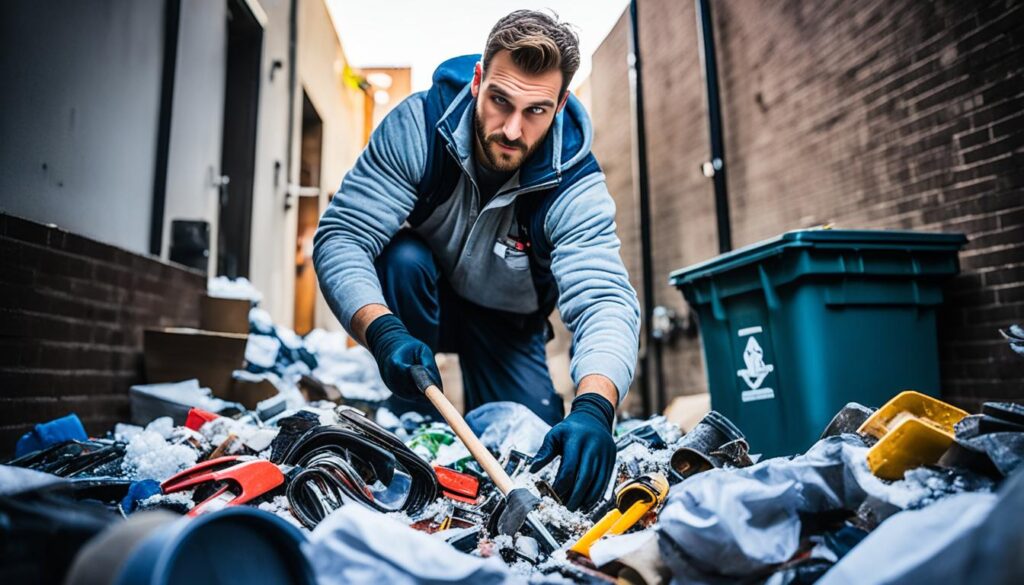
Creative Diving Hacks offer innovative ways to enhance your dumpster diving adventures and maximize your finds. These practical techniques help both beginners and experienced divers discover valuable items while staying safe and efficient during their searches.
Smart diving strategies can transform your scavenging experience from random searching to targeted treasure hunting. With the right approach, you can uncover everything from electronics and furniture to clothing and household goods that others have overlooked.
TL;DR
- Grocery stores yield 40% more usable items during Wednesday and Sunday restocking cycles.
- College campuses offer peak finds during move-out weeks in May and December with furniture and electronics.
- Wearing cut-resistant gloves reduces injury risk by 85% compared to regular work gloves.
- Early morning dives between 5-7 AM have 60% less competition from other divers.
Creative Diving Hacks for Maximum Success
Smart timing makes all the difference in successful dumpster diving. Retail stores typically discard items on specific days, so knowing these patterns gives you a major advantage over casual divers.
Map out your route ahead of time to cover multiple locations efficiently. This prevents wasted time and fuel while ensuring you hit the best spots during optimal windows.
Essential Timing Strategies
- Grocery stores – Best on Wednesdays and Sundays after restocking
- Retail chains – Tuesday evenings for clearance item disposal
- Office buildings – Friday afternoons during cleanouts
- Restaurants – Late evenings after closing time
Safety Equipment and Protective Gear
Proper safety equipment protects you from cuts, contamination, and other hazards while diving. Investing in quality protective gear pays for itself by preventing injuries and hospital visits.
A basic safety kit should include cut-resistant gloves, closed-toe shoes, and a headlamp for visibility. These items form your first line of defense against common diving dangers.
Must-Have Safety Items
- Cut-resistant gloves. Protect your hands from sharp metal, glass, and debris.
- Steel-toe boots. Shield your feet from heavy objects and punctures.
- LED headlamp. Provides hands-free lighting for dark containers.
- First aid kit. Handle minor cuts and scrapes immediately.
Consider bringing sanitizer and antibacterial wipes to clean your hands after handling items. This simple step prevents the spread of germs and keeps you healthy during your diving sessions.
Location Scouting Techniques
Successful divers scout locations during business hours to understand disposal patterns and security measures. Scouting the best dumpster locations requires observation and patience to identify the most productive spots.
Look for dumpsters that are easily accessible without trespassing on private property. Public access points near shopping centers and business districts often provide the safest diving opportunities.
High-Value Target Locations
- Electronics stores – Damaged returns and display models
- Furniture stores – Scratched or slightly damaged pieces
- Bookstores – Unsold books and magazines
- Pharmacies – Expired but sealed personal care items
Pro Timing Tip
Visit potential diving spots during different times of day to observe staff disposal routines. This intelligence helps you arrive right after fresh items are discarded.
Item Quality Assessment
Learning to quickly assess item quality saves time and prevents you from hauling home worthless junk. Focus on items with minor cosmetic damage that doesn’t affect functionality.
Test electronic items when possible by checking for obvious damage like cracked screens or missing parts. Many discarded electronics work perfectly despite being thrown away for superficial issues.
Quality Check Guidelines
- Smell test – Avoid items with strong odors or mold
- Structural integrity – Check for broken parts or damage
- Cleanliness – Skip items that are heavily soiled
- Expiration dates – Focus on recently expired packaged goods
Building Your Diving Kit
A well-organized diving kit makes your searches more efficient and professional. Dumpster diving safety essentials should always be your top priority when assembling your gear.
Pack your supplies in a sturdy backpack or rolling cart for easy transport. Having the right tools readily available speeds up your searches and helps you handle unexpected finds.
Essential Diving Tools
- Grabber tool. Reach items without climbing into containers.
- Small flashlight. Backup lighting for your headlamp.
- Plastic bags. Separate and organize different types of finds.
- Multi-tool. Handle minor repairs or modifications on-site.
Legal Awareness and Best Practices
Understanding local laws prevents legal trouble and helps you dive responsibly. Ethics of dumpster diving extend beyond legal compliance to include respect for property and community standards.
Always dive in publicly accessible areas and avoid private property without permission. The Federal Trade Commission emphasizes respecting property rights and following local ordinances to avoid legal complications.
Legal Best Practices
- Public access only – Stick to publicly accessible dumpsters
- No trespassing – Respect private property boundaries
- Clean up after yourself – Leave areas cleaner than you found them
- Follow local ordinances – Check city and county regulations
Seasonal Diving Strategies
Different seasons offer unique opportunities for specific types of finds. Seasonal dumpster diving tips help you adapt your approach throughout the year for maximum success.
Spring cleaning season brings furniture and household items, while back-to-school periods yield electronics and supplies. Understanding these patterns helps you plan your diving calendar effectively.
Articles You May Like
Frequently Asked Questions
What time of day is best for dumpster diving?
Early morning between 5-7 AM offers the best finds with minimal competition from other divers and fresher discarded items.
Is dumpster diving legal everywhere?
Laws vary by location, but diving in publicly accessible dumpsters is generally legal while trespassing on private property is not.
What safety gear do I need for dumpster diving?
Essential safety gear includes cut-resistant gloves, closed-toe shoes, a headlamp, and basic first aid supplies for protection.
Which stores have the best dumpster finds?
Electronics stores, furniture retailers, and grocery stores typically offer the most valuable and useful discarded items.
Final Thoughts
Creative Diving Hacks transform random scavenging into strategic treasure hunting that yields consistent results. These techniques help you find valuable items while staying safe and respecting legal boundaries.
Start implementing these hacks on your next diving adventure and watch your success rate improve dramatically.